
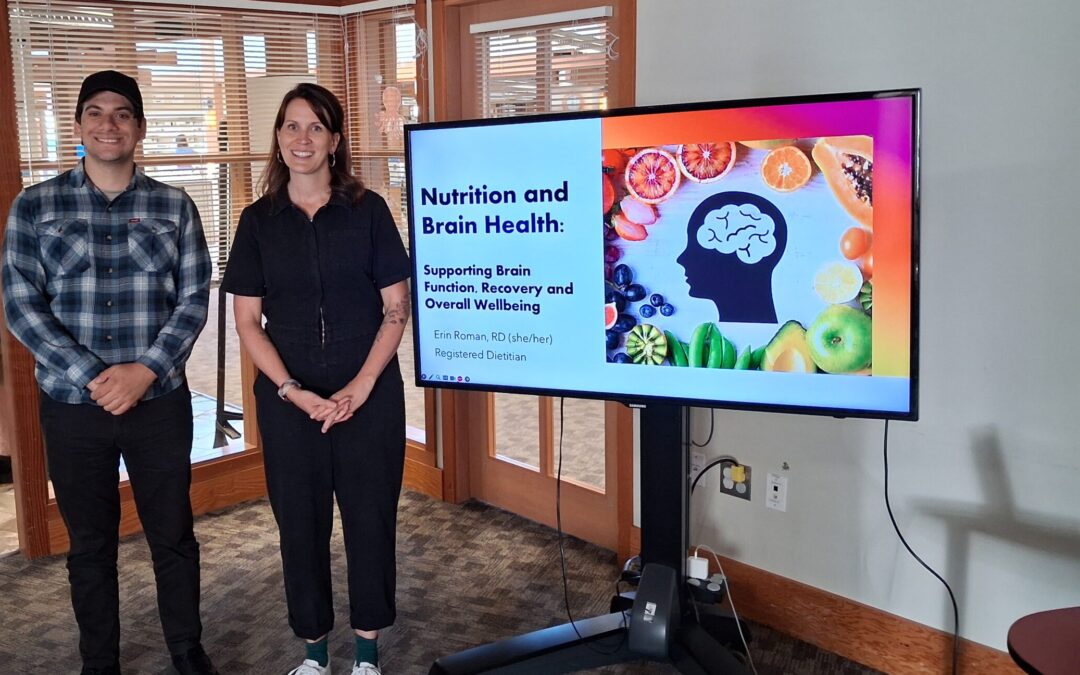
On September 16, CVHIS members gathered for a lively afternoon on nutrition and brain injury recovery with Erin, a nutrition professional with 20 years of experience. The room was full of great questions, so thank you to everyone who came. If you couldn’t make it, here are the highlights.
1. Your brain is hungry, and a healing brain is even hungrier
The brain makes up only about 2% of our body weight but uses about 20% of our energy. After a brain injury, those energy needs go up even more. “I’m sitting most of the day, so I don’t need to eat much” doesn’t apply to your brain. Food provides the fuel for energy production, cell repair and the brain chemicals that help us think and feel well.
2. Pattern matters more than “rules”
Erin pointed out that we’re drawn to lists of what not to eat. A more helpful question is: Am I getting what my body needs across the day? She encouraged everyone to let go of labelling foods, and themselves, as “good” or “bad.” When the body is well nourished, cravings for highly processed foods tend to quiet down on their own. An 80/20 approach leaves room for joy.
3. Build “slow fuel” meals to avoid energy crashes
Energy dips can feel like shaky hands, irritability, anxiety or foggy thinking, and they can make brain injury symptoms worse. Coffee can mask them. Keeping blood sugar steady supports how the injured brain uses energy. To keep energy steady:
- Pair carbohydrates with protein and a little fat. For example, as a snack, apple with nut butter or fruit with yogurt. For dinner, pair a salad with chicken or with beans and grains.
- Don’t skip breakfast. Evening cravings for sweet or salty foods often trace back to not eating enough slow fuels during the day.
- Eat at regular times. This helps a changed appetite come back, because your body learns when to expect food.
4. Protein is a priority
Erin called protein one of the most important nutrients in brain recovery research. It supports healing, immune function and, importantly, keeping muscle, which keeps us strong and steady. She shared that recovery needs are a minimum of about 1.2 grams of protein per kilogram of body weight per day.
Budget-friendly protein ideas:
- canned tuna or salmon (bonus: omega-3s)
- beans and lentils (rinse canned ones well if you have issues with gas)
- whole grains like quinoa or farro
- Greek yogurt
- frozen edamame
- mixing lentils or beans into ground meat to stretch it further
If you use plant milk, check the label. Oat and almond milks have very little protein, while soy milk and pea-based blends have about as much as dairy milk.
On protein powders: they can be an affordable option per serving, but being on a store shelf doesn’t mean a product has been tested. Look for a third-party testing symbol from one of these programs, whose websites also let you search certified products:
Tested powders are often no more expensive. Erin also suggests unflavoured versions, since artificial sweeteners can upset digestion.
5. Care for your gut, because it talks to your brain
The gut and brain communicate in both directions, and about 90% of serotonin is made in the gut. Brain injury can affect gut bacteria, and many people notice digestive changes afterward. Tips:
- Eat for variety. Think of your gut like a healthy forest with many kinds of plants, not a single crop. Different-coloured fruits and vegetables offer different antioxidants. Purple cabbage is an easy one.
- Get probiotics from food like yogurt, kefir, kimchi or refrigerated sauerkraut. Research on probiotic supplements for brain injury isn’t strong yet.
- Try ground flaxseed. Start with 1 teaspoon and work up to 1–2 tablespoons a day, with plenty of water. It must be ground, since whole seeds pass through undigested.
- Slow down at meals. Put your fork down between bites and take a deep breath. Eating with others and away from screens helps digestion too.
- Calm the nervous system. Stress directly affects the bowels. Long, slow exhales, such as breathing in for 4 and out for 6–8, can help calm the digestive system as well.
6. Hydrate, even if you’re not thirsty
Dehydration can make brain injury symptoms worse, and thirst cues can fade if we ignore them. Aim for about 1.5–2 litres a day. Water and herbal teas count, and a glass with every meal is an easy start.
7. Make the kitchen work for you
Erin shared tools and strategies for fatigue, mobility or memory challenges:
- Adaptive tools: rocker knives, one-handed can openers, spiked cutting boards, scoop dishes, grip aids for utensils, and perch stools for sitting at counter height.
- Safety helpers: visual timers, pot watchers that rattle when water boils, and automatic stove shutoffs.
- Batch cooking: double batches of meat or grains and freeze them in portions, or shred a rotisserie chicken.
- An organized fridge: clear containers and painter’s tape labels so leftovers don’t get lost.
- Accepting help: when someone offers to cook or clean, say yes. As Erin put it, food is one of the ways we pass on care, love and support.
To explore more options, see Flint Rehab’s guide to adaptive equipment and Brain Injury Canada’s assistive devices and technology page. Your occupational therapist can also help you find the right fit.
8. Be a savvy consumer of nutrition info
From “nuts are only healthy raw” (not true) to fad fasting and single-food diets, misinformation is everywhere. Ask whether a source is trying to sell a book, product or supplement. Be careful not to let worry about additives turn eating into something to fear. Focusing on adding whole foods into the diet can be more helpful than restriction. The trusted resources below are good places to start.
Trusted resources from Erin
Nutrition and brain injury
- Brain Injury Canada – Nutrition
- Headway UK – Diet after brain injury: healthy body, healthy mind
- Dietitians On Demand – Traumatic brain injury and nutrition: the dietitian’s role in recovery
Research
- Lee HY, Oh BM. Nutrition Management in Patients With Traumatic Brain Injury: A Narrative Review. Brain Neurorehabil. 2022;15(1):e4.
- Kurtz P, Rocha EEM. Nutrition Therapy, Glucose Control, and Brain Metabolism in Traumatic Brain Injury: A Multimodal Monitoring Approach. Front Neurosci. 2020;14:190.
Protein powder testing programs
Assistive devices
- Flint Rehab – Adaptive equipment for traumatic brain injury
- Brain Injury Canada – Assistive devices and technology
This post shares general information from a community workshop and isn’t personal medical advice. Please talk with your healthcare team before making significant changes to your diet, especially if you have diabetes or other health conditions.
This post was drafted with help from AI tools (Microsoft Word for transcription and Claude for summarizing), and reviewed by CVHIS staff and our presenter for accuracy.